
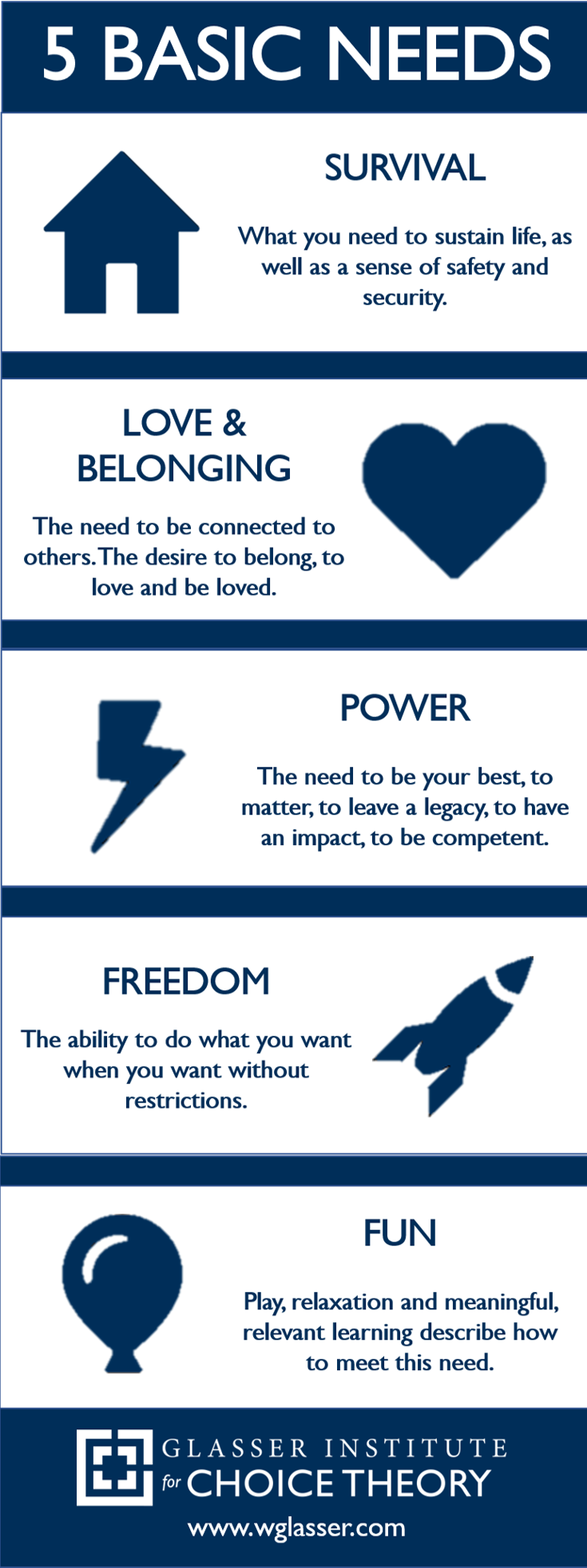
Human behavior is driven by five fundamental needs (not to be confused with maslow hierarchy of needs) as outlined in Choice Theory: Survival, Power, Love and Belonging, Freedom, and Fun. These needs shape our choices, interactions, and the way we engage in different environments.
Survival is the most primal need and often the most apparent in early childhood—like a baby crying for food. As we grow, the other needs become more prominent in our daily lives, influencing our relationships and commitments.

How Each Member can Meet Their Needs in a Cell Group
Our basic needs are met when we fulfil a picture in our head that is satisfying to us.
During a cell session, members are usually able to meet two primary needs depending on the group dynamics:
The picture that I have of a cell, is where I am able to share, knowing that there is confidentiality, and that people care about what I’m sharing.
- Survival – The cell provides a safe space where members feel secure to share and reflect.
- Power – Members experience growth as they learn about the Word and deepen their faith.
- Love and Belonging – This is partially met when members pray for and encourage each other.
However, with only two hours in a cell session, time is limited. Not every member may have all their needs met within that setting. Furthermore, we can only meet our own needs; expecting others to meet them for us would be a form of rescuing. The only one who fully meets our needs is Jesus—our true Saviour.
What Happens When Needs Aren’t Met?
Our needs can be ignored temporarily, but they must be eventually satisfied.
When individuals are unable to meet their needs in a given environment, they naturally seek fulfilment elsewhere.
For example,
- Someone who cannot express themselves freely at home may do so in friendships or at work.
- In a more challenging scenario, unmet needs in marriage can lead to unfaithfulness as individuals look outside their covenant for fulfillment.
As you can see, there are both responsible and irresponsible ways to meet our needs.
The definition of responsibility is as such:
In my attempts to meet my needs, I do not prevent another person (or infringe on their rights) from having the same opportunity to meet their needs as well.
A simple picture to understand of responsibility – in my sharing during cell, I also give other people time to share.
Why Fellowship Matters Beyond Cell Sessions – Responsible platforms aligned to the faith
This is why I prioritise fellowship opportunities, like the JB trips. Extended time together allows for:
- Love and Belonging – Members can both love and receive love in a natural and unhurried way.
- Fun – Enjoying activities together meets the need for personal and shared enjoyment.
- Community Beyond Church Walls – A chance to build relationships outside structured church settings.
It doesn’t have to be complicated – just find something that we enjoy doing together (like board games, one day museum outings), and let the relationships grow.
I believe that if we have a culture of meeting our needs with community, we are meeting our needs through experiencing an intangible God through God’s tangible people.
The Risk of Limiting Cell to Just Lessons
If the cell journey is reduced to structured lessons without considering these needs, members will still seek to have their needs met—just that they are met outside of the cell.
That is why intentional planning is necessary.
By acknowledging and supporting these fundamental needs in our gatherings, we cultivate a cell experience that is fulfilling not just for the members, but also for those leading the group.
A satisfying cell experience considers the whole person, not just their learning.
When we take these needs into account, we create an environment where people grow, connect, and find joy in both God and community.
Final Thoughts
I’ve seen how understanding the basic needs plays a role when planning publicity for a church camp, event, or retreat. By sharing publicity that highlights how a participant may fulfill their needs, I hope to connect with them more effectively.
I’ve also witnessed how applying the understanding of basic needs was helpful in organising events.
When I intentionally create opportunities for attendees to meet any of their five basic needs, I have hope that events are more satisfying, leading to recurring sign-ups after the initial publicity.
In the example of church camps— if the organiser packs the schedule with loads of content that is catered for growth (and support people to meet their power need), but do not cater for time to rest, then they are not also supporting people in meeting their need for rest.
Young Adults often power through their life, while ignoring their basic need to rest, resulting in behaviours associated with burnout – like withdrawing, disengaging etc.
We will do well to avoid unintentionally replicating the same pattern in our various communities : focusing on some needs, and ignoring the others.
The faith journey can be a satisfying one if we choose to be intentional.