
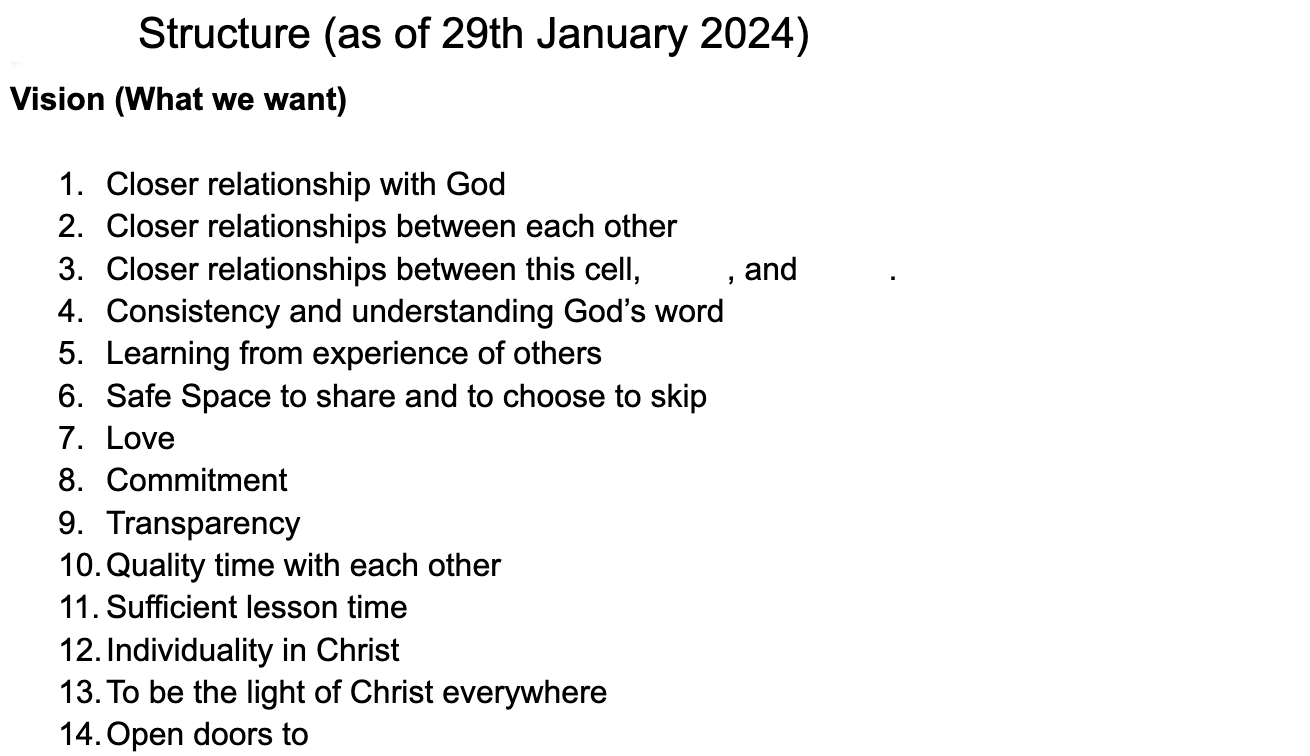
Forming a consensus within a cell group is a powerful process that unites members toward a shared vision while respecting individual goals.
Through years of practice and learning, I’ve identified three core elements that were helpful in forming the foundation of a meaningful consensus:
- Church Vision: The consensus must align with the overarching vision of the church. This ensures that the cell remains part of the larger body, contributing to its mission and growth.
- Cell Leaders’ Goals: As spiritual shepherds, cell leaders’ objectives guide the group’s spiritual direction and community-building efforts. They must reflect their vision in the consensus.
- Members’ Goals: Each member’s personal and spiritual aspirations are vital. Incorporating their goals ensures the cell is a place of growth and support for everyone involved.
Including a Cell Theme
In the cells that I am in, we include a cell theme—often inspired from a passage of Scripture.
The theme serves as a spiritual anchor, providing direction and inspiration for the cell’s journey throughout the year.
Examples of such themes that we have used:
- True Disciples of God (John 12:36)
- The Reality of Christ (Luke 9:23)
- Building God’s House
Key Realizations for Effective Consensus
Over the years, I realize that forming a cell consensus goes beyond listing goals. The following principles have proven essential to creating a unified “we” picture.
The Cell Consensus is a “We” Picture, Not a “Me” Picture
A consensus represents the collective aspirations of the group, not just individual desires. It’s a shared commitment to growth, purpose, and unity that transcends personal preferences.
Support the “We” Picture, Even if Parts Don’t Fully Align A consensus might include elements that don’t perfectly align with every individual’s goals. However, the commitment to the group’s collective vision requires focusing on the bigger picture and supporting it wholeheartedly.
Communicate the “Me” Picture for Inclusion Each member’s goals and aspirations are valuable.
Each member is responsible for communicating their “me” picture as much as possible.
If you don’t communicate the “me” picture to the cell, the consensus may exclude it. Communicating the “me” picture also does not mean automatic inclusion into the consensus—
However, if the “me” picture is in alignment with the church vision and there are no conflicts with other things in the consensus, we have hope that it would be included.
This communication builds a sense of belonging and mutual respect.
Practical Steps for Building Consensus
- Start with Prayer: Seek God’s guidance for a vision that honors Him and reflects His purposes for the cell group.
- Facilitate Open Dialogue: The cell leader’s role is to facilitate safe platforms for sharing and practice as much of the 7 connecting habits as possible. Encourage members to share their goals and thoughts. Use tools like surveys or group discussions to hear everyone’s voice.
- Clarify the Church’s Vision: Discuss how the cell’s activities and goals fit within the larger framework of the church’s mission.
- Combine Goals: Merge the input from leaders and members to create a cohesive vision. Highlight areas of overlap and align individual aspirations with group objectives.
- Commit to the Vision: Ensure every member understands and agrees to the consensus. A united commitment makes it easier to navigate challenges and remain focused on shared goals.
Conclusion
A well-formed consensus reflects the heart of a cell group: unity in diversity.
By prioritizing the “we” picture, supporting the collective vision, and communicating individual goals effectively, a cell group can grow spiritually and relationally, honoring God through their shared journey.
For more on leadership and unity in the church, check out this article on external and internal control in church leadership.