
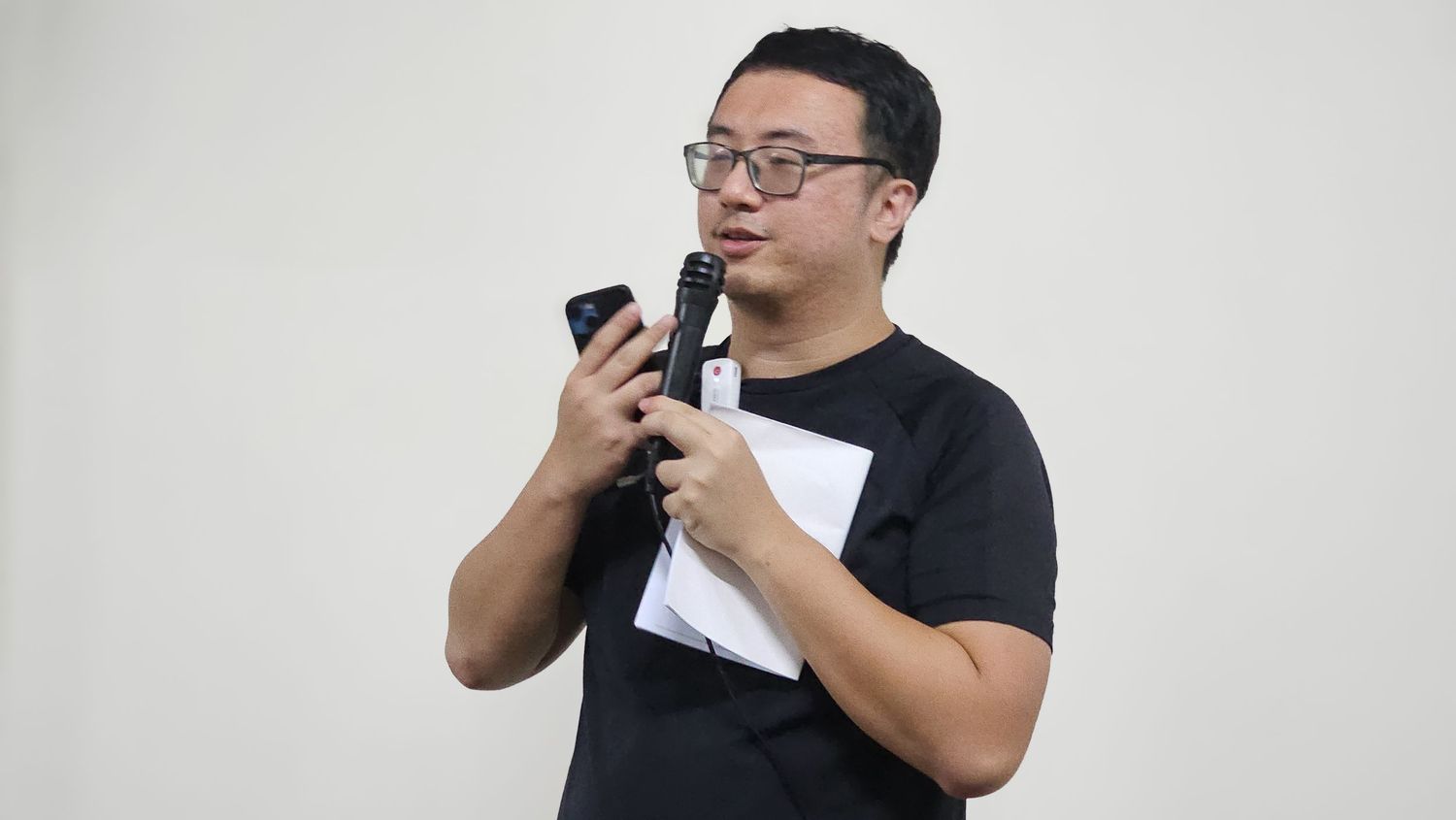
I recently volunteered to run a plenary at a church retreat on reconnecting the community.
One of the reasons why I volunteered was because I felt that teaching Choice Theory (CTRT) in hopes of building satisfying relationships was applicable here.
I took a risk and decided to step out of my comfort zone to engage with the audience and allow for some freedom and fun within the plenary.
1. Relating with the Survival need people
The first thing that I did was try to relate to the people who may be unfamiliar with the community.
The first audience interaction I did was to invite the people who also wanted a sense of safety to raise their hands.
I shared about how having a sense of safety is important to me and how I’m going to take a risk by encouraging audience interaction.
2. Relating through the sharing of Quality World (QW) pictures.
When people signed up for the retreat, we invited them to share their hopes for attending the retreat.
By reading about their hopes (which belong in their QW), I was able to immediately relate to them. I shared about my hopes to build connections within the cluster, even beyond cells.
I divided them into smaller groups for quality sharing and invited them to share within their groups on their definition of Quality time.
Through the sharing, they discovered that they have common ideas of what was quality to each of them.
Landing point 1:
The more we agree with each other, the stronger our relationship is. I encouraged them to focus on growing what’s common between all of them, instead of focusing on the differences.
Relating through the sharing of Perceived World pictures
I invited them to choose a Bible verse about community that resonated with them and share within their group what the verse means to them.
This time, I invited three people to share their PW pictures of the group’s interactions.
They observed:
- Common Bible verses
- Different perspectives on the Bible verses
I observed:
- Laughter
- Acceptance of each other’s perspectives
Landing point 2:
There is a time and space for us to read the Word of God by ourselves for self-edification. When we come together and talk about the Word of God, we allow our head knowledge to become heart knowledge. As we come together and fellowship, we find that we have more and more in common and sometimes allow ourselves to accept even the differences.
For the last point that I was delivering on connecting habits, I invited a member of the audience to pretend to be someone with whom they have a painful relationship.
I had a conversation with this person, nicknamed Dodo, and applied most, if not all, of the 7 connecting habits.
I asked Dodo how he felt – he felt a sense of warmth. I asked the audience what they learned from observing the interaction: I heard many agreements about the 7-Connecting habits.
The point that I delivered to the audience was this:
Landing Point 3:
The only person that we can really control is ourselves (paraphrased from Choice Theory Axiom 1). By applying the 7-connecting habits, we can hope to be able to form satisfying relationships.
In closing, I got everyone to gather in a circle, and each shared something that they learned. There were many different perspectives and quality world pictures.
I really liked that I took a risk to interact with the audience.
On hindsight, what I might have done differently was to invite each participant to apply the 7-connecting habits in response to each other’s self-evaluation.
As much as this plenary was intended to be a platform for learning for others, I feel that I’ve learnt some things about myself:
- When I meet my Survival need (I feel safe), I can choose to take the next step in meeting my Power need (Achieving something).
- I can teach Choice Theory by inviting people to engage with me as I apply the concepts of Choice Theory, without preaching Choice Theory and leaving it as knowledge.
To God be the glory.