
Why I Care About Creating Good Publicity
I believe that publicity is important, because publicity is one of the primary ways that give people visibility into the event we are inviting them to.

What Good Publicity Means to Me
I think publicity means an accurate representation of the team and the event.
Why I Put in the Effort
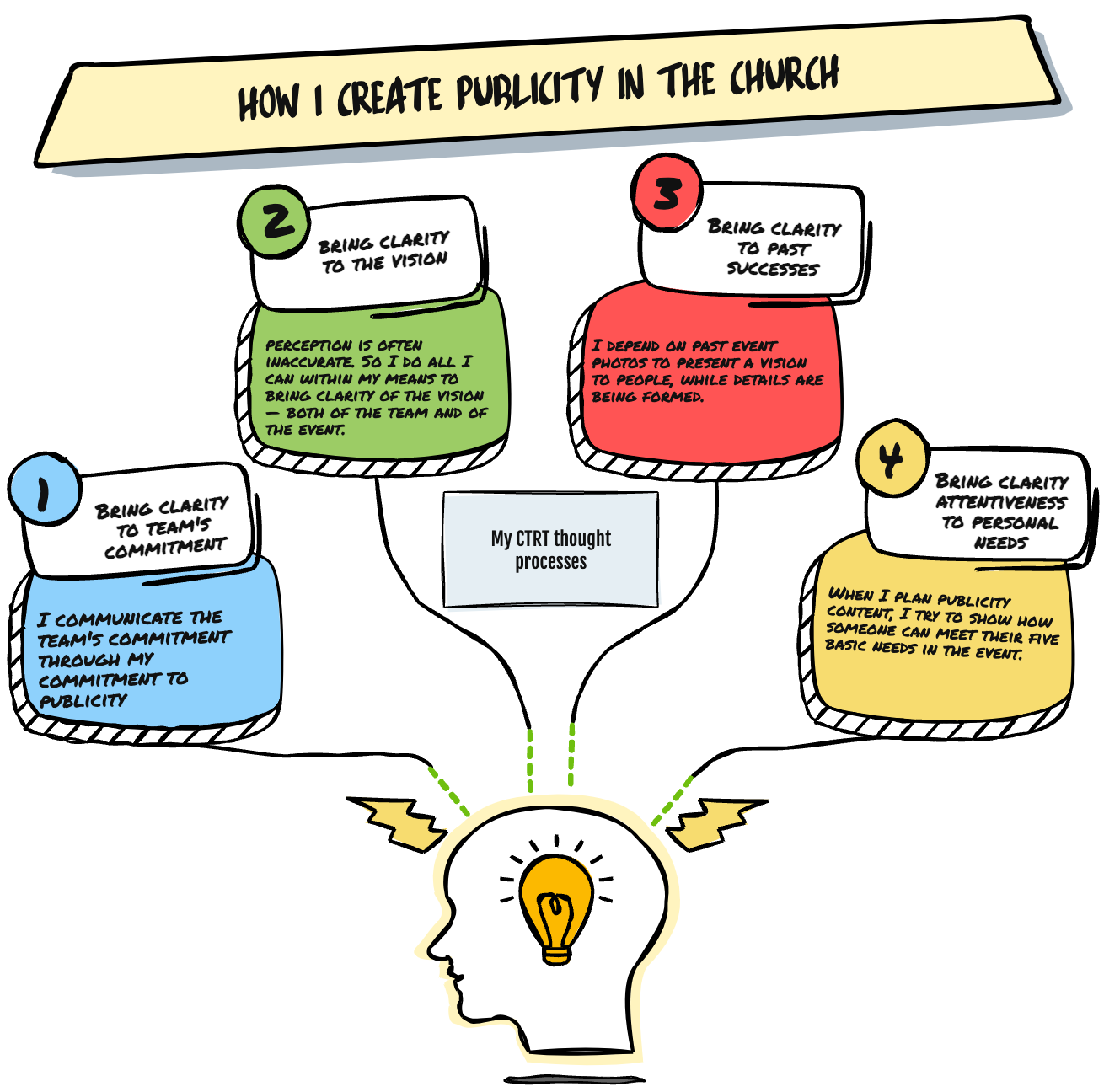
The reason I emphasise putting effort into publicity is that it’s through publicity that I’m communicating the effort of the team.
I usually release more than one publicity material for any event that I’m giving information on.
Shifting Perception with Choice Theory
From a Choice Theory perspective, I know that perception is often inaccurate. So I do what I can within my means to bring clarity — both to the team and to the event.
How Our Senses Shape Perception
According to Choice Theory, we interact with the real world — things and people that exist — through our five senses: sight, hearing, touch, taste, and smell.
Some of us rely more on our sight than our hearing, while others may be the opposite. For example, with Famous Amos, we often engage with the fragrance of the cookies through our sense of smell before we even see the store.
Engaging the Senses Through Publicity
Therefore, in my publicity, I usually release 2–3 publicity posts to engage with the senses. If that’s not possible for me because of timeline issues, then I try to be a little more intentional about also speaking to people about the event.
When There’s Not Much to Show (Yet)
At the planning stage, there isn’t much to present through publicity — because the event is new, or the team is new, and we haven’t figured everything out.
And that’s ok.
I depend on past event photos to present a vision to people.
It’s also the reason I attempt to take photos of recurring events — so that next year’s publicity team can use them.

Starting with Vision and Goals
One thing I like to ask the team is: “What’s your vision? What are your goals?”
These are important questions — not just for us, but also for the people we are inviting.
When we are clear, then they can check in with themselves and decide whether they align with the goals.
Being Authentic with Our Beliefs
For someone new to the event, they may not find value in the goals — and that’s fine too.
Presenting our beliefs can also be a way to be authentic and clear about who we are and what we care about.
Publicity That Speaks to the 5 Basic Needs
When I plan publicity content, I try to show how someone can meet their five basic needs in the event:
- Power – What can the member achieve in the event? I clarify this with the team by revisiting our goals and trying to think from a participant’s point of view — especially spiritual goals.
- Love and Belonging – Community is important, so I usually show more group photos to reflect that connection.
- Freedom – If there’s a loose schedule with room for personal time, I include that too.
- Fun – I might feature games that have been played before or moments of joy the team experienced.
- Survival – I highlight the basic comforts like rest, food, and safe spaces.
Sharing Quality World Pictures

I’m sharing quality world pictures by showing these types of content. Each quality world picture, when fulfilled by the person, can meet two or more basic needs.
For example, a dinner at a loklok place — that usually meets Love and Belonging, and Survival. It’s not just food, it’s connection over food.
Photos of the team planning together usually help, because they communicate perspective—real people planned the event with care.
When Details Are More completed
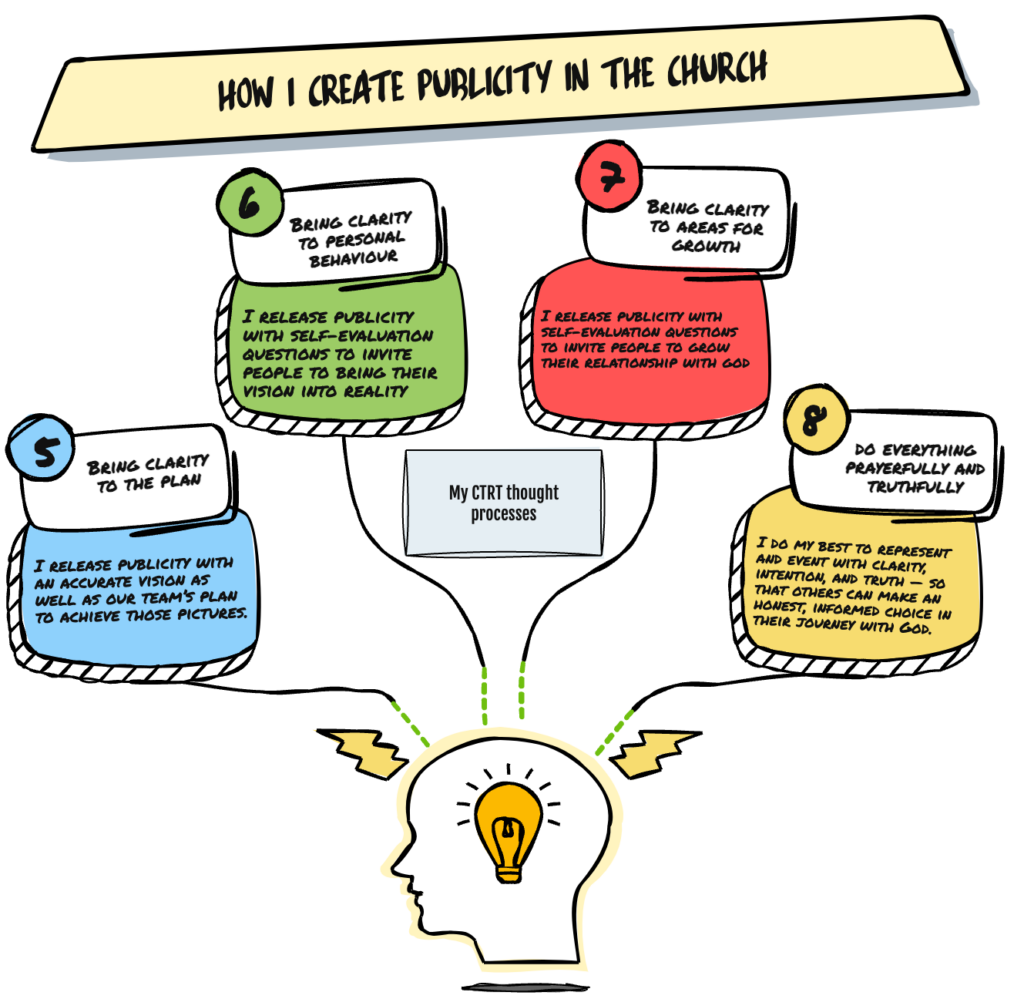
Later on, when the details are a little more completed, I release more publicity with accurate quality world pictures, as well as our team’s plan to achieve those pictures.
This is important for the people who have a high need for Survival — they want to know the structure, the schedule, the logistics. Clarity helps them feel safe enough to consider joining.
When It’s No Longer About Perspective
When I’ve done all that I can to address both perspective and what we hope to achieve, there will still be some who hold back.
Then, it’s not a matter of insufficient perspective given, or not enough quality world pictures.
It becomes a behaviour matter.
Some people have had negative experiences. Some people sit on the fence, regardless of the information presented.
Everything up to this point that I’ve shared is from Choice Theory.
Choice Theory is also known as Choice Theory and Reality Therapy (CTRT).
The Reality Therapy part comes in the form of asking questions — questions that help people turn their vision into reality.
Asking Questions That Return Power
Choice Theory also calls these kinds of questions RDWEP questions.
For now, I’ll just focus on E — which stands for Evaluation.
E questions help a person self-evaluate whether what they are doing is realistic, responsible, or right.
E is not for us to judge others.
When we ask these questions, we are putting the power back into the person’s hands — so that they can weigh their own choices.
For example:
“Is sitting on the fence helping or hurting you to get what you want?”
Or, a more specific version:
“Is holding on to your experience helping or hurting you to have the future that you want?”
And for a Christian who’s wrestling with a decision:
“Is continuing to do what you are doing helping or hurting your relationship with God?”
A Reflection — Staying Connected to the Vine
This verse addresses connection with God as the source of life and fruitfulness.
“I am the vine; you are the branches. If you remain in me and I in you, you will bear much fruit; apart from me you can do nothing.”
— John 15:5 (NIV)
That question — “Is doing this helping or hurting your relationship with God?” — prompts the person to evaluate whether they are remaining (abiding) in Him.
The choices we make either draw us closer to the Vine — or disconnect us from Him.
And Jesus is clear: even if we appear busy or successful outwardly, apart from Him, we are ultimately unfruitful.
My Final Word — The Questions I Ask Myself
The E questions I ask myself when I do publicity are these:
- Is sending out a simple text as publicity realistic or not realistic to bring clarity to God’s glory?
- In putting in the effort to paint an accurate picture of the event, am I being responsible or irresponsible with myself and others?

These questions help me stay aligned with what matters most to me.
Not just sharing about an event, but representing it with clarity, intention, and truth — so that others can make an honest, informed choice in their journey with God.
If my publicity is to glorify God, then I must also represent my Christian values in what I do.
Continue to guide me Lord.
In Jesus Name,
Amen.